
Personal Information Often Stolen In A Data Breaches
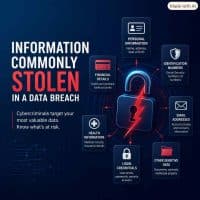
A data breach can reveal much more than just your name and email address. Many organizations, such as companies, employers, healthcare providers, banks, retailers, and technology firms, hold large amounts of information about the people who trust them. If their security fails, cybercriminals might access details that could be used for identity theft, financial fraud, account takeovers, phishing, medical fraud, and other crimes. Some stolen information, like passwords or credit card numbers, can be changed, but other details, such as Social Security numbers or biometric data, can create long-term risks. At Net Law Advocates, we help people across the United States whose personal, financial, biometric, or other sensitive information has been exposed.
Knowing exactly what information was stolen is key when considering a possible data breach lawsuit. The type of information, what happened to it, the details of the breach, and the losses people suffered all play a role in deciding if there is a legal claim.
Social Security Numbers
Social Security numbers are one of the most serious types of information that can be exposed in a data breach. Unlike passwords, you cannot easily change your Social Security number if it is stolen.
Criminals can potentially combine a Social Security number with a person’s name, birth date, address, or other identifying information to commit identity theft. Stolen Social Security numbers may be used in attempts to obtain credit, create fraudulent accounts, file false tax returns, obtain employment using another person’s identity, or commit other forms of fraud.
For victims, the impact of a breach can last long after a company says its systems are fixed. We look at what information was exposed and the risks and losses it caused when we review a possible claim.
Driver’s License And Government Identification Information
Data breaches may expose driver’s license numbers, passport information, state identification numbers, immigration documents, or copies of identification documents.
Government-issued identification can be particularly valuable when combined with other stolen personal information. A criminal may have more information available to impersonate the victim, attempt to defeat identity-verification procedures, or commit financial fraud.
A breach that includes an image of a driver’s license or passport is especially worrying because one file can contain a photo, full legal name, birth date, address, ID number, and more.
Bank Account And Payment Information
Financial information is another common target of cybercriminals. A compromised database may contain bank account numbers, routing numbers, credit card information, debit card numbers, payment histories, billing addresses, or stored payment credentials.
Victims might find unauthorized purchases, withdrawals, transfers, or attempts to access their financial accounts. Even if a bank or credit card company later reverses the charges, victims often spend a lot of time spotting the fraud, contacting banks, replacing cards, updating account details, and securing other accounts.
Our cybersecurity lawyers look at the full financial impact of the incident, not just whether you got your money back after an unauthorized transaction. The consequences go far beyond the account involved in the original breach. Many people use the same or similar passwords for multiple websites. Criminals know this and may test compromised credentials against email accounts, financial services, shopping sites, social media platforms, and other online accounts.
Email accounts are especially important because people often use them to reset passwords for other services. If someone gets into your email, they might be able to take over more of your accounts.
Data breaches can also expose security questions, authentication details, access tokens, PINs, and other credentials used to confirm your identity.
Medical And Health Information
Healthcare data breaches can expose highly sensitive information. Compromised records may include medical histories, diagnoses, prescription information, treatment records, health insurance information, billing records, patient identification numbers, laboratory results, and other health-related information.
Medical information presents concerns that extend beyond conventional financial fraud. A victim cannot change a medical history in the same way that a compromised credit card can be replaced.
Healthcare organizations often have Social Security numbers, addresses, insurance details, payment information, and other personal data. This means one healthcare breach can expose many types of sensitive information at once.
Employee And Payroll Information
Employers maintain extensive records about current and former employees. A breach of an employer’s systems may expose Social Security numbers, tax documents, direct-deposit information, payroll records, background checks, benefit information, addresses, employment records, and emergency contact information.
Employees did not necessarily choose to provide all of this information voluntarily. Much of it was required as part of obtaining or maintaining employment.
When an employer collects sensitive information, affected employees may reasonably question whether appropriate security measures were used to protect it. We represent employees and other individuals who suffer harm following the compromise of information maintained by businesses and organizations.
Biometric Identifiers And Biometric Information
Biometric information raises distinct privacy concerns because it may involve characteristics associated with an individual’s physical or behavioral identity. Depending on the technology involved, companies may collect fingerprints, facial geometry, voiceprints, iris information, or other biometric identifiers.
Employees may encounter biometric systems when clocking in and out of work. Consumers may encounter facial recognition, voice authentication, or other biometric technology when interacting with businesses and digital services.
Certain states impose specific requirements concerning the collection, possession, disclosure, retention, or destruction of biometric information. Potential claims therefore depend heavily on where the affected individual is located, what information was collected, how it was handled, and which law applies.
Names, Addresses, Dates Of Birth And Contact Information
A name or email address by itself may appear less sensitive than a Social Security number, but personal identifiers can become significantly more dangerous when combined.
A compromised database might contain a victim’s full name, date of birth, home address, telephone number, email address, and other identifying details. Criminals may combine these records with information obtained from other breaches or public sources.
This information can facilitate convincing phishing messages and impersonation attempts. A fraudulent email containing accurate personal information may appear much more legitimate to the person receiving it.
Tax And Financial Records
Tax documents can contain a concentrated collection of sensitive information, including Social Security numbers, addresses, employer information, income, and financial details.
A breach involving W-2 forms, tax returns, accounting records, or similar documents may therefore create substantial identity-theft and fraud concerns. Businesses, payroll companies, accounting providers, employers, and other organizations that maintain these records may become targets because a single compromised file can provide criminals with multiple pieces of valuable information.
Personal Communications And Private Files
Not every data breach is primarily about financial information. Cybercriminals may obtain emails, photographs, private messages, documents, cloud files, internal communications, or other personal content.
The unauthorized disclosure of private communications can create consequences that are very different from fraudulent credit card activity. Depending on what was exposed, victims may experience embarrassment, reputational harm, employment problems, invasion of privacy, or other personal and financial consequences. We consider the nature of the information itself when evaluating how a breach affected a client.
Children’s Personal Information
A data breach involving children can create particular concerns because identity theft may remain undiscovered for a significant period. Children generally are not regularly applying for loans or reviewing credit histories, potentially giving fraudulent activity more time to go unnoticed.
Schools, healthcare providers, technology platforms, extracurricular organizations, and other entities may possess children’s names, birth dates, addresses, Social Security numbers, medical information, parent information, and educational records.
Parents who receive notice that a child’s sensitive information was compromised should take the incident seriously and preserve the breach notification and other related records.
Why The Type Of Stolen Data Matters In A Data Breach Lawsuit
Not every data breach produces the same legal claim. A case involving exposed email addresses is materially different from one involving Social Security numbers, financial credentials, medical records, or biometric identifiers.
When we evaluate a potential lawsuit, we may consider what information the organization possessed, how it was stored, how the unauthorized access occurred, what information was obtained, whether it was misused, what notice was provided, what security measures were in place, and what harm affected individuals experienced.
Applicable law also varies considerably across the United States. Federal statutes and state privacy, consumer protection, biometric, cybersecurity, and data breach laws may create different rights and remedies depending on the circumstances.
Evidence To Preserve After A Data Breach
If you receive notice that your information was compromised, preserving documentation can become important. Keep the original breach notification, emails from the affected company, credit-monitoring offers, correspondence with financial institutions, fraud alerts, credit reports, receipts, and records showing unauthorized transactions.
Document the time you spend responding to the incident and keep records of expenses associated with addressing suspected fraud or identity theft. If you notice suspicious activity, preserve screenshots and correspondence rather than relying on memory.
These records may help us understand what happened and establish the actual consequences of the breach.
Contact Net Law Advocates For Your Free Data Breach Consultation
Learning that a company lost control of your sensitive information can leave you wondering what criminals obtained, how the information might be used, and whether the organization could have prevented the breach. You should not have to answer those questions alone.
At Net Law Advocates, our data breach lawyers represent plaintiffs in data breach and digital privacy matters throughout the United States. We investigate the circumstances surrounding the breach, evaluate the types of information compromised, assess applicable law, and determine whether affected consumers, employees, patients, customers, or other individuals may have grounds to pursue compensation.
If you believe your data was exposed or used unlawfully, please fill out our secure web form or call us at 888-913-2318 to schedule a free consultation. We represent plaintiffs throughout the United States and can evaluate whether you may have a claim arising from the exposure or misuse of your information.
