
Recent Blog Posts

Can You Sue After Your Personal Information Is Sold On The Dark Web?
Learning that your personal information has appeared for sale on the dark web can be far more serious than receiving a routine data breach notice. It may mean that information entrusted to an employer, financial institution, healthcare provider, retailer, technology company, or other organization has moved into a marketplace where stolen data can be… Read More »
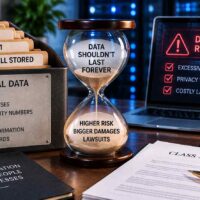
When Companies Store Personal Data Longer Than Necessary And Get Sued For It
Companies gather personal information for many reasons, such as employment, financial transactions, online accounts, customer service, security, mobile apps, and healthcare. However, having a valid reason to collect data does not mean a company can keep it forever. Holding onto sensitive information after it is no longer needed can raise the risk of identity… Read More »
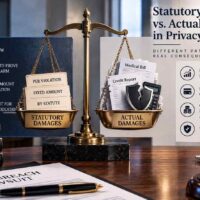
Statutory Damages Vs. Actual Damages In Privacy Litigation
If a company collects your personal information without permission, exposes your sensitive data, misuses your biometrics, or violates your privacy rights, you might wonder how much your claim could be worth. The answer often depends on whether the law allows for statutory damages, actual damages, or both. These two types of compensation work differently… Read More »
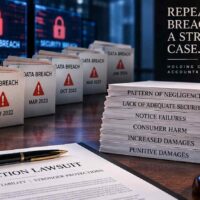
Why Repeated Data Breaches Strengthen Plaintiff Lawsuits
A data breach can put Social Security numbers, financial details, medical records, login information, employee files, and other sensitive data at risk. If the same company is breached again, the legal issues can become much more serious. A previous cybersecurity incident may have already alerted the company to problems in its security and the… Read More »
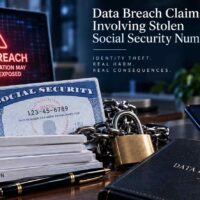
Data Breach Claims Involving Stolen Social Security Numbers
A data breach that exposes Social Security numbers can put victims at risk for a long time, even after the company says the incident is over. Unlike a password or credit card, you usually cannot cancel or replace your Social Security number. Criminals may use a stolen Social Security number along with your name,… Read More »
How Plaintiffs Prove Negligence In Data Breach Lawsuits
A data breach does not always mean the company was legally negligent. Plaintiffs need to show that the organization had a duty to protect sensitive information, failed to use reasonable safeguards, and caused legally recognized harm. This process can involve looking at cybersecurity practices, company policies, state laws, industry standards, vendor relationships, and what… Read More »
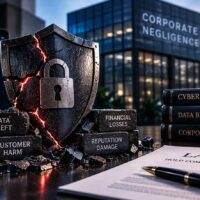
Suing Companies That Ignore Known Cybersecurity Risks
Companies that collect personal information need to take cybersecurity warnings seriously. If a business knows about serious weaknesses in its systems but does nothing, employees, customers, patients, and others can suffer. A preventable cyberattack might expose Social Security numbers, financial details, medical records, passwords, biometric data, and other sensitive information. Victims could then face… Read More »
Data Breach Lawsuits Based On Failure To Encrypt Personal Information
When a company collects Social Security numbers, financial information, medical records, employee files, login credentials, or other sensitive data, protecting that information should be a fundamental part of its cybersecurity practices. Encryption can provide an important layer of protection by making information unreadable without the appropriate key or process. When sensitive personal information is… Read More »

How Plaintiffs Prove Statutory Damages In Biometric Privacy Cases
Biometric technology is now a regular part of daily life, and many people may not realize how much personal information is being gathered. Employers might use fingerprint or hand scanners for tracking work hours, businesses could use facial recognition, and tech companies often process facial features or other biometric data through their services. Unlike… Read More »
Should I Sue If My Fingerprint Data Was Collected Without Notice?
Fingerprint scanners are now used in many places, like workplaces, warehouses, healthcare facilities, retail stores, gyms, and apartment buildings. Employers might ask for a fingerprint to clock in, and businesses may use them for building access, identity checks, or account security. While this can seem like an easy alternative to passwords or ID cards,… Read More »